

Early Life

Kathleen Boyt Smith was born in England in 1901 to Percy and Ettie Boyt Smith. Shortly after Kathleen’s birth, the Smith family returned to Constantine, Algeria, where they were missionaries and operated a school for orphan boys. While in Algeria, Kathleen’s brother, Harold, and sister, Ethel, were born. The three Smith children attended the French school in Constantine, but the family spoke English at home. Kathleen’s gentle French accent remained with her ever after.
Education
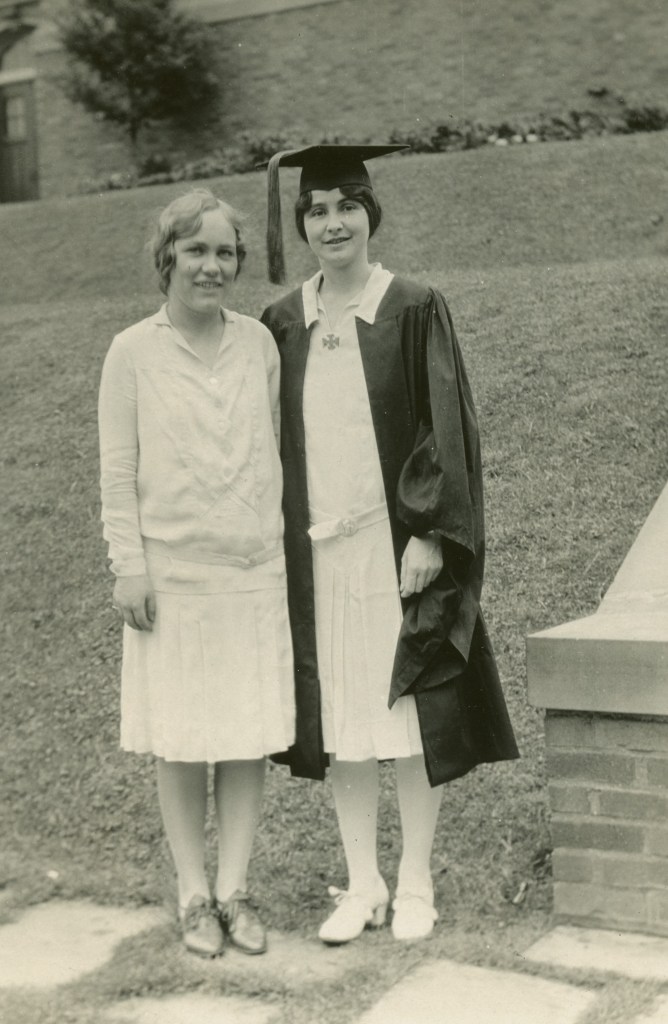
Kathleen came to America for her college education, graduating from Ohio Wesleyan in 1923. She decided on a career in medicine. During medical school she displayed symptoms that could have been tuberculosis. She was sent to recover at the Trudeau Sanatorium in Saranac, New York. While there she met another physician, Dr. Lewis Jordan, who would eventually become her husband.
After a year at the Trudeau Sanatorium, Kathleen resumed her medical studies and graduated with honors from Case Western Reserve University in 1929. She served her internship at Cleveland Babies and Children’s Hospital. Kathleen had a passion for working with children and this was the beginning of a life dedicated to the health of families and children.
Medical Practice

In 1930, Kathleen arrived in Granite Falls, Minnesota, married Dr. Lewis Jordan and began her medical practice. Lewis managed the Riverside TB Sanatorium near Granite Falls. Kathleen worked with the school children and the public, conducting and interpreting thousands of Mantoux tests, charting the presence of the disease in the population, and educating the public about the disease.
Over the course of 40 years, Kathleen would perform around 2 million tests.
Mantoux Testing at Schools

Dr. Jordan travelled around to schools, testing children to see if they had TB. The Mantoux Test was a two-step process, with step one involving a small injection to the forearm with a serum that would react if there was evidence of TB in the patient’s blood. During this injection process, Dr. Jordan would distract the student by talking about hunting for various wild animals. Not only were the stories distracting, but her French accent kept the children’s minds off the test being performed on their arms.
The second step in the test required Dr. Jordan to return to the schools to inspect if the students had a red bump on their forearms where the serum had been injected. If there was a bump, it would alert Dr. Jordan to the need for further investigation and testing. In her career, Dr. Jordan performed over 2 million tests.
Later Years

After Lewis died in 1965, Kathleen gradually stepped back from her medical practice but increased her activities in education and public service. In 1968 she taught science and biology to students at the Piney Woods School near Jackson, Mississippi. In later years she was able to make trips to many foreign countries and returned once more to Algeria.
Dr. Kathleen Jordan passed away at age 92 in 1993. She had made an immeasurable difference in public health by reducing the presence of TB in the region.
 The Dr. Kathleen Jordan Project